Smartwatches, ECG, and AFib: How Technology Is Catching Heart Problems Early

April 06, 2026
Read time: 7 mins
In today’s fast-moving world, technology is not just making life easier; it is also saving lives. One of the biggest innovations in health is the rise of smartwatch ECG for heart health. These small devices, worn on the wrist, are now helping people monitor their hearts in real time.
Heart disease is still one of the leading causes of death worldwide. Many heart problems develop silently, without clear symptoms. This is why early detection of heart problems with technology has become so important. Smartwatches are playing a key role in this change by helping people detect issues like atrial fibrillation (AFib) early.
What Is AFib and Why Is It Dangerous?
Atrial fibrillation, or AFib, is a condition where the heart beats in an irregular and often fast rhythm. Instead of a steady heartbeat, the heart’s upper chambers (atria) beat chaotically. This can lead to poor blood flow and increase the risk of blood clots.
If a clot travels to the brain, it can cause a stroke. That’s why AFib is considered a serious condition.
The problem is that many people don’t even know they have AFib. Some may feel mild symptoms like:
- Palpitations
- Fatigue
- Shortness of breath
- Dizziness
But others may have no symptoms at all. This makes detecting AFib with smartwatch technology extremely useful, especially for people who are unaware of their condition.
How Smartwatch ECG Works
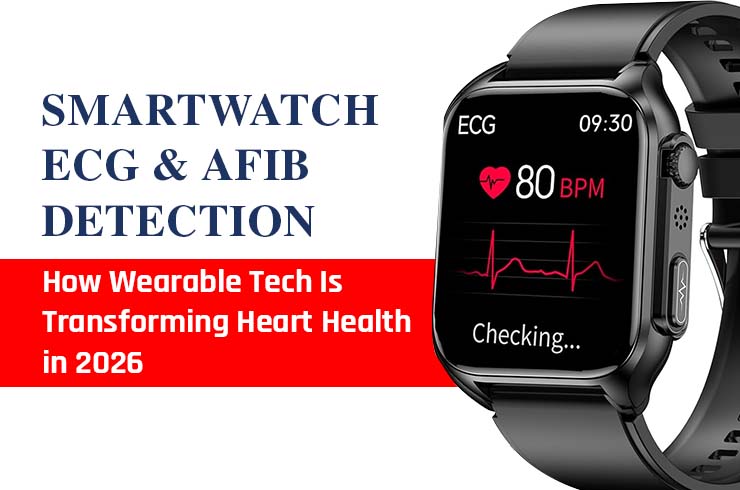
A smartwatch with an ECG (electrocardiogram) can record the electrical activity of your heart. Traditionally, ECG tests were only available in hospitals. Now, you can check your heart rhythm anytime, anywhere.
Here’s how it works:
- You wear the smartwatch on your wrist
- You place your finger on the sensor
- The watch records your heart signals for about 30 seconds
- It analyses the rhythm and shows the result
The result may show:
- Normal sinus rhythm
- Signs of AFib
- Inconclusive reading
This simple process makes an ECG on a smartwatch a powerful tool for everyday heart health.
Detecting AFib with Smartwatch: A New Era in Healthcare
One of the biggest benefits of smartwatches is their ability to detect irregular heart rhythms early. Detecting AFib with smartwatch devices is now becoming common around the world.
Many modern smartwatches also use sensors to continuously track your pulse. These sensors can identify unusual patterns in your heartbeat, even when you are resting or sleeping.
If the watch detects something unusual, it sends an alert. This gives you a chance to consult a doctor before the condition becomes serious.
This kind of early warning system was not possible before. People often find out about AFib only after complications like a stroke. Now, technology is changing that.
Wearable Heart Monitors 2026: What’s New?
As we move forward, wearable heart monitors in 2026 are becoming smarter and more advanced. Today’s smartwatches are not just step counters; they are becoming complete health devices.
Some of the latest features include:
- Continuous heart rate monitoring
- ECG recording anytime
- Blood oxygen (SpO2) tracking
- Sleep tracking
- Stress level monitoring
In 2026, wearable devices are expected to include even more advanced features like:
- Better AI-based heart rhythm detection
- Improved accuracy for AFib detection
- Integration with doctors and hospitals
- Real-time health alerts
These advancements are making wearable devices more reliable and useful for both patients and doctors.
Early Detection of Heart Problems with Technology
One of the most important benefits of smartwatches is the early detection of heart problems with technology.
Many heart conditions develop slowly over time. If they are detected early, they can be managed or even reversed with proper treatment and lifestyle changes.
Smartwatches help by:
- Monitoring heart activity 24/7
- Detecting irregular patterns
- Sending alerts for abnormal readings
- Storing data for future analysis
This continuous monitoring is especially helpful for conditions that come and go, like AFib. Traditional tests may miss these short episodes, but smartwatches can catch them.
Early detection means:
- Early treatment
- Lower risk of complications
- Better long-term health
Smartwatches for Heart Patients
Today, smartwatches for heart patients are becoming very popular. Doctors are also recommending them as a support tool for monitoring heart health.
For heart patients, these devices can help in many ways:
- Tracking heart rhythm daily
- Monitoring recovery after treatment
- Detecting warning signs early
- Sharing health data with doctors
For example, a patient who has already had AFib can use a smartwatch to monitor their condition regularly. If the watch detects irregular activity again, the patient can take action quickly.
This gives patients more control over their health and reduces the chances of emergencies.
How Accurate Are Smartwatch ECGs?
Many people wonder if smartwatches are accurate. The answer is yes, but with some limitations.
Smartwatch ECGs are quite good at detecting AFib. Studies have shown that they can identify irregular rhythms with high accuracy. However, they are not perfect.
Important points to remember:
- They are screening tools, not diagnostic tools
- They may sometimes give false alerts
- They cannot replace hospital ECG tests
Even with these limitations, smartwatch ECG for heart health is still very useful for early detection and regular monitoring.
Benefits of Using Smartwatches for Heart Monitoring
Smartwatches have become a powerful tool for supporting heart health. They offer real-time insights and help individuals stay proactive about their well-being. Here are the key benefits explained more effectively:
1. Convenience
Smartwatches allow you to monitor your heart health anytime and anywhere, without the need for frequent hospital visits.
2. Continuous Monitoring
Unlike occasional medical tests, smartwatches track your heart rate and related parameters throughout the day, providing a more complete picture of your heart health.
3. Early Alerts
Many smartwatches can detect unusual heart rhythms or sudden changes and alert you early, helping prevent serious complications.
4. Better Awareness
Regular tracking increases your awareness of your heart condition, encouraging healthier lifestyle choices.
5. Data Tracking
Smartwatches store your health data over time, which can be easily shared with doctors for better diagnosis and treatment planning.
These benefits make smartwatches for heart patients a valuable addition to modern healthcare.
Limitations You Should Know
While smartwatches are helpful, they are not perfect. Some limitations include:
- False positives (wrong alerts)
- False negatives (missed issues)
- Limited ECG detail (only single-lead)
- Errors due to movement or improper use
It is important to use these devices wisely. Always consult a doctor if you get abnormal readings.
The Role of AI in Wearable Heart Monitors
Artificial intelligence (AI) is making wearable heart monitors in 2026 even more powerful.
AI can:
- Analyse large amounts of heart data
- Detect patterns that humans may miss
- Improve accuracy over time
- Predict possible heart risks
In the future, AI-powered smartwatches may be able to detect more conditions, not just AFib.
Who Should Use Smartwatch ECG?
Smartwatch ECG is useful for many people, especially:
- People above 40 or 50 years old
- Those with high blood pressure
- Diabetic patients
- People with a family history of heart disease
- Anyone experiencing palpitations or irregular heartbeat
Even healthy individuals can benefit from early detection of heart problems with technology.
The Future of Heart Health Technology
The future of heart monitoring is exciting. With rapid advancements, smartwatches are becoming more powerful every year.
In the coming years, we may see:
- More accurate ECG systems
- Multi-lead ECG in wearables
- Direct connection with doctors
- Real-time emergency alerts
- Full health monitoring systems
These innovations will make detecting AFib with a smartwatch even easier and more reliable.
Conclusion
Smartwatches are changing the way we look at heart health. With features like ECG, continuous monitoring, and AI-based analysis, they are helping people detect problems early and take action in time.
Whether it is a smartwatch ECG for heart health, detecting AFib with a smartwatch, or using wearable heart monitors in 2026, the goal is the same: to save lives through early detection.
For patients and even healthy individuals, smartwatches for heart patients are becoming an essential tool. They provide awareness, convenience, and most importantly, peace of mind.
Technology is not replacing doctors, but it is helping people reach doctors at the right time. And when it comes to heart health, early action can make all the difference.